


by Dave Rudolph, Managing Director, Biblical Ministries Worldwide South Africa
There are some truths that never grow old. They are not fashionable ideas that rise and fall with the mood of the age. They are bedrock truths, established by God, woven into the fabric of His purposes, and entrusted to His people from the beginning.
One of those truths is this: God has given parents the sacred responsibility of passing truth along to their children.
From the opening chapters of Genesis, when God commanded Adam and Eve to be fruitful and multiply, the home has been central to God’s design for the raising of children who know Him, fear Him, and walk in His ways. Later, through Moses, God gave Israel this well-known command:
“Hear, O Israel: The LORD our God, the LORD is one. You shall love the LORD your God with all your heart and with all your soul and with all your might… You shall teach them diligently to your children…”
— Deuteronomy 6:4–7
The instruction was not limited to formal settings. It was to happen when families sat in the house, walked by the way, lay down at night, and rose in the morning. In other words, the truth of God was to be woven into the ordinary rhythm of family life.
That same responsibility remains today. The church also has a vital role to play in teaching children the truth of God’s Word, but the church is not meant to replace the home. Parents — and especially fathers where possible — are called to be the primary source of spiritual instruction, gospel influence, and godly example for their children.
This is why we must recover a simple but powerful conviction: the mission of God begins at home.
A Psalm for the Next Generation
Psalm 78 begins with a call to listen:
“Give ear, O my people, to my teaching; incline your ears to the words of my mouth!”
— Psalm 78:1
This Psalm of Asaph is a reflective and instructive psalm. It looks back on the history of Israel, not merely to preserve national memory, but to teach spiritual truth. It reminds God’s people of His mighty works, His patience, His mercy, and His faithfulness, even when His people were rebellious, forgetful, and ungrateful.
But before Asaph recounts Israel’s history, he tells us why this history matters:
“We will not hide them from their children, but tell to the coming generation the glorious deeds of the LORD, and his might, and the wonders that he has done.”
— Psalm 78:4
Here is the heart of the matter. God’s works must not be hidden from the next generation. His Word must not be treated as private treasure to be admired quietly but never passed on. The stories of Scripture, the truth of the gospel, the testimony of God’s faithfulness, and the wonder of His salvation are to be deliberately, lovingly, and repeatedly placed before our children.
The mission of God is global, but it does not bypass the living room, the dinner table, the bedside, or the family conversation. The Great Commission reaches to the nations, but it also begins with the children God has entrusted to our care.
Teach Them to Listen
Asaph begins with, “Give ear… incline your ears.” Before truth can be received, there must be a listening ear.
That may sound obvious, but in our day it is no small matter. Children are surrounded by voices. They are shaped by screens, peers, entertainment, influencers, algorithms, school environments, and the broader culture. Many of these voices are not neutral. They are actively discipling the next generation toward a particular view of identity, morality, success, pleasure, and truth.
Parents cannot afford to be passive.
One of the great responsibilities of parenting is to cultivate in our children a listening spirit — not through harshness or intimidation, but through loving, consistent, patient instruction. Children should learn to hear the voice of a father or mother who speaks with tenderness, conviction, wisdom, and authority.
This kind of listening is trained over time. It is developed through ordinary moments of correction, conversation, prayer, Scripture reading, and example. When parents earn the listening ear of a child, they are granted access to something far more precious: the heart.
And once we have their ear, we must give them something better than our opinions. We must give them the truth of God.
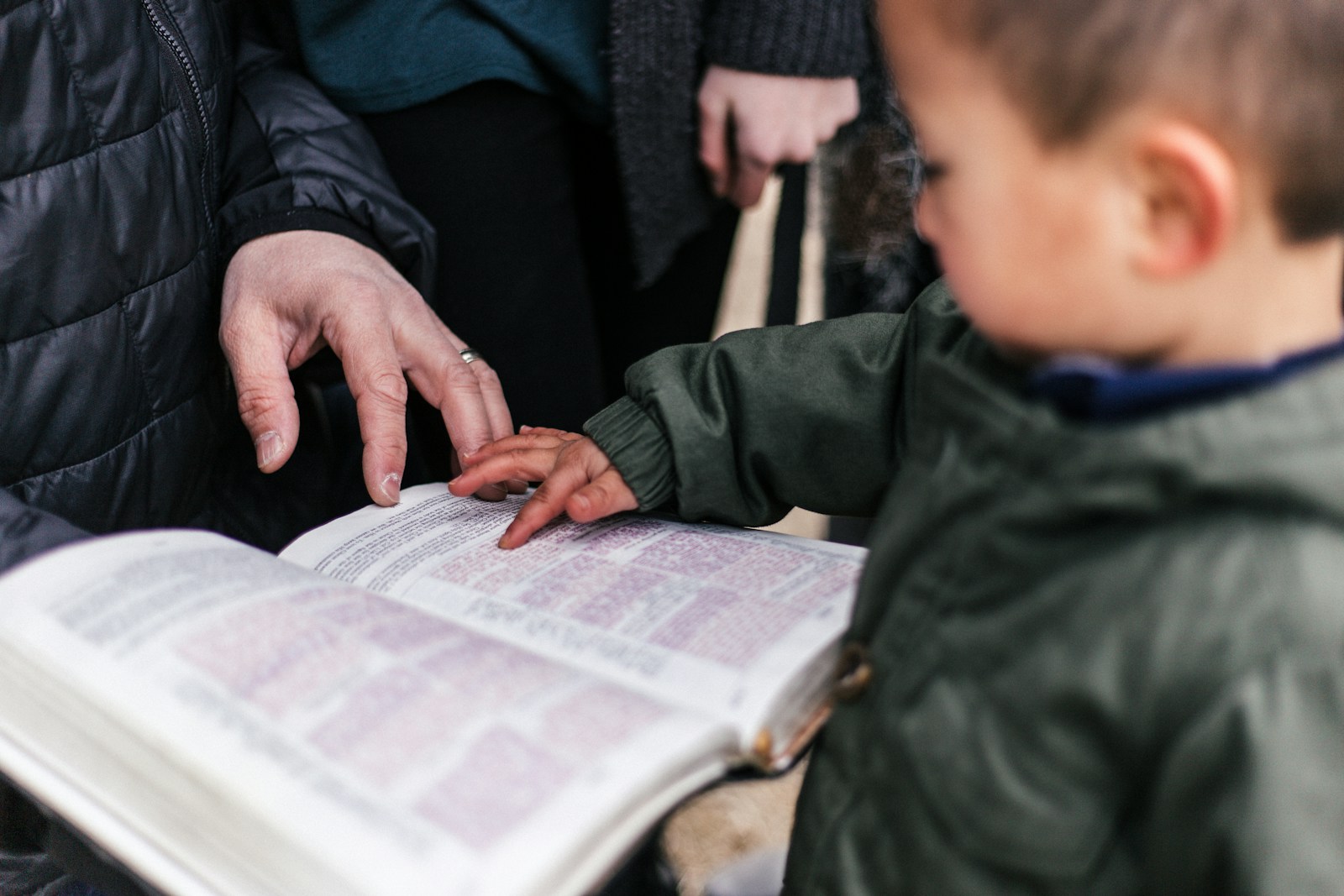
Tell Them What God Has Done
Asaph says, “We will not hide them from their children.” That phrase should stop us in our tracks.
It is possible to hide truth by denying it. But it is also possible to hide truth by neglecting it. A parent does not need to openly reject Scripture in order to fail here. Silence can do great damage. Spiritual neutrality in the home is not an option Scripture gives us.
Our children need to hear of “the glorious deeds of the LORD, and his might, and the wonders that he has done.” They need to hear the great accounts of creation, the fall, the flood, the promises to Abraham, the deliverance from Egypt, the giving of the law, the conquest of the land, the rise and fall of kings, the warnings of the prophets, and the faithfulness of God through every generation.
They need to hear of David’s courage, Daniel’s faithfulness, Esther’s providential calling, Ruth’s loyal love, Elijah’s boldness, and Jonah’s reluctant mission. They need to see that the Old Testament is not a collection of irrelevant stories from a distant age, but a living testimony to the character and works of God. Even more, they need to hear of Christ.
They need to hear of His incarnation, His compassion, His authority, His miracles, His teaching, His suffering, His substitutionary death, His victorious resurrection, and His commission to His disciples. They need to hear how ordinary men and women were transformed by the gospel and sent into the world with the message of salvation. And they need to hear how that same gospel has changed us.
Parents should not only tell their children what God did in biblical history; they should also speak humbly and wisely about what God has done in their own lives. Children should hear their parents speak of repentance, forgiveness, answered prayer, God’s provision, lessons learned through suffering, and the joy of walking with Christ.
A child’s faith is not produced mechanically by family devotions, but the regular telling of God’s works creates a gospel-shaped environment in which faith is nourished, questions are welcomed, and truth is made visible.
Keep Passing Down the Truth
Psalm 78 gives us a generational vision:
“He commanded our fathers to teach to their children, that the next generation might know them, the children yet unborn, and arise and tell them to their children.”
— Psalm 78:5–6
This is a beautiful picture of truth travelling from one generation to the next. Fathers and mothers teach their children. Those children grow up, know the works of God, and one day teach children of their own. The chain continues. What we do today may bear fruit long after we are gone.
Many parents underestimate the significance of small acts of faithfulness. Reading Scripture with tired children before bedtime may not feel dramatic. Praying with a child in the car may seem ordinary. Answering difficult questions at the dinner table may feel inadequate. Bringing children faithfully into the life of the local church may not appear immediately fruitful.
But God often uses ordinary faithfulness to produce extraordinary fruit.
Do not grow weary. Do not despise the small moments. Do not conclude that because your children are restless, distracted, or slow to understand, the effort is wasted. The truths of God’s Word are living truths. The Spirit of God is able to use them in ways we cannot see at the time.
The task of Christian parenting is not to produce outwardly polished children who merely know how to behave in religious settings. The aim is far deeper. We long for our children to know God, trust Christ, love His Word, remember His works, obey His commands, and live for His glory.
Encourage Them to Hope in God
Psalm 78:7 gives the intended outcome:
“So that they should set their hope in God and not forget the works of God, but keep his commandments.”
This is the goal. We teach, tell, read, pray, correct, encourage, and model the Christian life so that our children might set their hope in God. Parents cannot save their children. Salvation belongs to the Lord. No father or mother can regenerate the heart of a child, forgive sin, or grant eternal life. Only God can do that by His Spirit through the gospel of Jesus Christ.
But parents are responsible to place that gospel before their children clearly, lovingly, and often.
We are responsible to tell them that they are sinners in need of grace, and to tell them that Jesus Christ died for us (sinners) and rose again. We are responsible to urge them to repent and believe, and to show them—by our own lives— that following Christ is not merely something we speak about on Sundays, but the very centre of who we are.
Children need to see faith lived. They need to see parents confess sin, ask forgiveness, pray in weakness, trust God in trials, serve others, love the church, open the Bible, and speak of Christ with affection and reverence. They need to know that Christianity is not a family tradition we preserve for cultural reasons. It is life in Christ.

Do Not Turn Back
Later in Psalm 78, Asaph gives a sobering warning:
“The Ephraimites, armed with the bow, turned back on the day of battle.”
— Psalm 78:9
They were equipped, but they retreated. They had what they needed, but they failed to stand. The Psalm goes on to say that they forgot God’s works and refused to walk according to His law. That is a warning for every generation.
We are in a spiritual battle for the hearts and minds of our children. This battle is not imaginary. We see it in the confusion of our age, in the pressure of the culture, in the constant noise of media, and in the many competing visions of what life is for. Parents must not turn back.
Fathers, do not abandon your post. Mothers, do not underestimate your influence. Churches, do not neglect the children and young people God has placed among you. We have the Word of God. We know the works of God. We have the gospel of Christ. We are indwelt by the Spirit of God. We are supported by the people of God. We have everything we need to be faithful.
The mission of God begins at home because the home is one of the first training grounds for worshippers, disciples, servants, and missionaries. A child who grows up hearing of the glory of God, seeing faith lived sincerely, and learning to love the gospel is being prepared not only to follow Christ personally, but to take His name to others.
Some of those children may one day carry the gospel into neighbouring communities, into South African townships and suburbs, into rural villages, across African borders, and even across the seas. The missionary vision of the church is strengthened when families take seriously the spiritual formation of the next generation.
Your home may be more strategic than you realise.
A Call to Families and Churches
The church is always one generation away from forgetting. That is why Psalm 78 matters so deeply. We must not hide the works of God from our children. We must tell the coming generation of His glorious deeds, His might, and His wonders.
So open the Bible at home. Pray with your children. Speak naturally of the Lord. Tell them the great stories of Scripture. Bring them into the life of the church. Let them hear you rejoice in the gospel. Let them see you repent. Let them watch you trust God. Let them learn that Christ is worthy of their hope, obedience, worship, and lives.
And let us pray that, by God’s grace, the next generation will not forget the works of God, but will rise up and tell their children.
At Biblical Ministries Worldwide South Africa, we exist to serve local churches as they train, qualify, send out, and support missionaries for the work of gospel ministry. We long to see healthy churches planted everywhere through evangelism, discipleship, and leadership development.
If this article has stirred your heart to think more intentionally about your family’s role in the mission of God, or your church’s responsibility to equip the next generation, we would love to connect with you. Explore more resources on our website, especially articles on missions, disciple-making, and sending churches, or contact us to learn how Biblical Ministries Worldwide South Africa can help your church take its next faithful step in Great Commission ministry.
